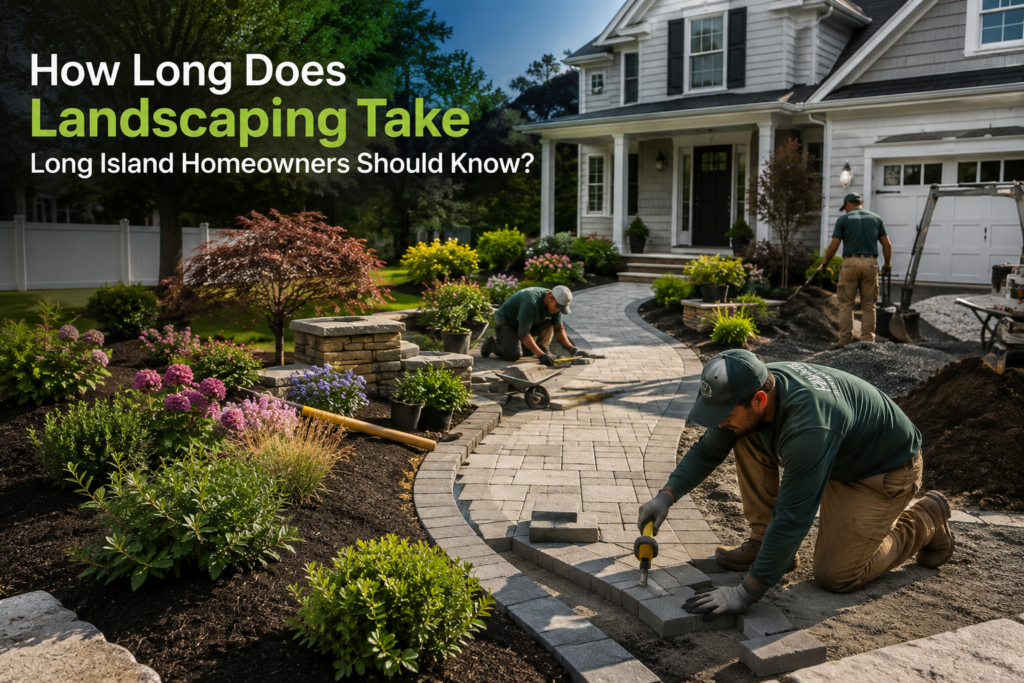
How long landscaping takes Long Island homeowners often want to understand before starting an outdoor improvement project. Whether you are planning a small garden update, a complete backyard renovation, or a full landscape transformation, the timeline depends on several factors. The size of the project, design requirements, weather conditions, material availability, and contractor scheduling all influence how quickly your outdoor space can be completed.
Many homeowners want a clear landscaping timeline before investing in improvements. Having realistic expectations helps you prepare your property, plan your budget, and understand each stage of the process. A well-planned approach that combines functionality with landscaping architecture can create an outdoor space that complements your home while providing long-term value. From the initial design phase to the final installation, every step plays an important role in creating a successful landscape.
Key Takeaways
- Small landscaping improvements may take a few days to a couple of weeks, while larger projects can take several months.
- Weather, property conditions, and material availability can affect project completion dates.
- Backyard renovations usually require more time because they include multiple construction stages.
- A detailed plan helps create a more realistic project schedule.
Professional landscape planning can improve results and reduce unnecessary delays.
What Determines How Long Landscaping Projects Take in Long Island?
Every landscaping project has a different timeline because every property has unique needs. A simple planting project requires less preparation compared to a complete outdoor renovation with patios, lighting, walkways, and custom features.
Before starting work, professionals evaluate the property, understand the homeowner’s goals, and develop a plan that matches the space. This process helps identify possible challenges and creates a smoother installation experience.
Several factors influence the duration of a landscaping project:
- Project size: Larger properties and complex designs require more time.
- Design details: Custom features need additional planning and installation.
- Site preparation: Removing old landscaping or fixing drainage issues can extend the timeline.
- Material availability: Special materials may require additional ordering time.
- Weather conditions: Rain, snow, and extreme temperatures can slow outdoor work.
Contractor availability: Busy seasons may affect scheduling.
Planning these details early allows homeowners to understand their expected completion date and avoid unexpected surprises.
Average Landscaping Timeline for Long Island Homes
The amount of time required for landscaping depends on the type of improvement being completed. Some projects focus only on appearance, while others involve construction, planting, and long-term outdoor planning.
A realistic timeline can help homeowners decide when to begin their project and what preparation is needed before work starts.
Typical landscaping timelines include:
- Small landscape updates: Several days to two weeks
- Medium landscaping projects: Three to eight weeks
Large outdoor renovations: Two to six months
Understanding these time frames helps homeowners create realistic expectations and prepare for each stage of the process.
Small Landscaping Projects: 1–2 Weeks
Small landscaping improvements are usually quicker because they require fewer materials and less construction work. These projects are ideal for homeowners who want to improve curb appeal without making major changes to their outdoor space.
Common small landscaping projects include:
- Flower bed installation
- Mulching
- Seasonal planting
- Lawn improvements
- Shrub replacement
Garden updates
Although these projects may be completed quickly, proper preparation is still important. Soil conditions, plant selection, and property layout should be reviewed before installation begins.
Medium Landscaping Projects: 3–8 Weeks
Medium-sized landscaping projects require more planning because they often include multiple features. These projects may involve changing the layout of outdoor areas, adding new features, or improving the overall function of the property.
Examples include:
- Landscape redesign
- Walkway installation
- Lawn replacement
- Garden expansion
- Outdoor lighting
Small patio additions
During this stage, contractors may need to prepare the site, remove existing features, install new materials, and complete finishing details. A well-organized plan helps keep the project moving efficiently.
Large Landscaping Projects: 2–6 Months
Large landscaping projects require detailed planning because they combine multiple services and construction stages. A complete outdoor transformation often involves design, preparation, installation, and final adjustments.
Large projects may include:
- Complete backyard renovations
- Outdoor living spaces
- Patios and seating areas
- Retaining walls
- Water features
Custom landscape designs
These projects may require coordination between different professionals, including masonry contractors, designers, and landscape specialists. Proper scheduling ensures every part of the project is completed correctly.
How Backyard Renovations Affect Landscaping Timelines
Backyard renovations usually take longer than basic landscaping improvements because they involve several phases of work. Creating a new outdoor living area requires planning, preparation, construction, and detailed finishing.
The backyard renovation time LI homeowners should expect depends on the features being added and the condition of the existing space.
A typical backyard renovation may include:
- Site evaluation and design planning
- Removal of old materials
- Ground preparation
- Hardscape installation
- Planting and finishing work
Final cleanup
A complete backyard transformation may take several weeks or months, but careful planning helps create a smoother process and better final results.
Planning Stage: The First Step Before Landscaping Begins
The planning stage sets the foundation for a successful landscaping project. Many homeowners focus only on installation time, but design preparation can significantly affect the overall schedule.
During the planning process, professionals review:
- Property layout
- Soil conditions
- Drainage requirements
- Sun exposure
- Existing plants
- Home architecture
Maintenance needs
A detailed plan helps prevent changes during construction and ensures every feature works well together.
This is where Landscape with Architecture becomes important. Combining landscape design with the structure of the home creates an outdoor space that feels balanced, practical, and visually appealing.
How Weather Impacts Landscaping Timelines in Long Island
Weather plays a major role in determining landscaping schedules. Long Island experiences seasonal changes, including cold winters, heavy rainfall, summer heat, and coastal conditions that can affect outdoor projects.
Weather-related delays may happen because:
- Wet soil makes excavation difficult
- Heavy rain slows installation
- Freezing temperatures affect construction
Extreme heat impacts plant installation
Choosing the right project timing and using suitable materials can help reduce weather-related issues.
Homeowners should consider seasonal conditions when planning landscaping work because proper timing can improve both project efficiency and landscape health.
Common Landscaping Project Delays in New York
Even with careful planning, some landscaping projects may experience delays. Outdoor projects often depend on natural conditions, supplier schedules, and property requirements.
Common causes of delays include:
- Unexpected weather changes
- Material delivery issues
- Design modifications
- Permit requirements
- Hidden site problems
Busy contractor schedules
Many homeowners searching for information about project delays landscaping NY want to understand what is normal. Small adjustments are common during outdoor construction, especially when working with natural landscapes.
Discussing possible challenges with your contractor before work begins helps create a more realistic schedule and reduces frustration during the project.
How to Create a Realistic Landscaping Timeline With Your Contractor
A clear timeline helps homeowners understand what to expect before landscaping work begins. Many delays happen because homeowners underestimate the time needed for design, preparation, installation, and final adjustments. A professional contractor will review every stage of the project and provide a realistic schedule based on the property and project goals.
A contractor timeline realistic approach includes planning for possible challenges while keeping the project organized. A good timeline should include:
- Initial consultation and site evaluation
- Design approval and material selection
- Preparation and removal work
- Installation phases
Final inspection and cleanup
Having open communication with your contractor makes it easier to track progress and address changes before they affect the schedule.
The Best Time of Year to Start a Landscaping Project in Long Island
Choosing the right season can have a major impact on your landscaping timeline. Long Island’s changing weather conditions mean that some outdoor projects work better during certain months.
Spring and fall are often preferred for planting because moderate temperatures help new plants establish strong roots. However, construction-based projects such as patios, walkways, and outdoor features may be completed during different seasons depending on weather and availability.
The best seasons for landscaping projects include:
- Spring: Ideal for planting, lawn improvements, and garden updates.
- Summer: Suitable for many construction projects but may require additional watering and care.
- Fall: Great for planting and preparing landscapes before winter.
Winter: Usually slower for planting but useful for planning and design.
Proper seasonal planning allows homeowners to avoid unnecessary delays and protect their investment.
How Long Do Different Landscaping Features Take to Install?
The features included in your landscape design will directly affect the completion time. Some additions require only a short installation period, while others involve construction and detailed preparation.
Here is an estimated timeline for common landscaping features:
Landscaping Feature | Estimated Timeline |
|---|---|
Garden beds and planting | A few days to 2 weeks |
Lawn installation | 1–3 weeks |
Outdoor lighting | Several days to 2 weeks |
Walkways | 1–3 weeks |
Patios | 2–6 weeks |
Retaining walls | Several weeks |
Complete backyard renovation | 2–6 months |
Projects that involve hardscape elements often require more time because they include excavation, foundation preparation, and detailed installation.
Does Landscaping Help Sell a House Faster?
Many homeowners wonder, Does landscaping help sell house faster? A well-designed outdoor space can create a strong first impression and make a property more attractive to potential buyers.
A maintained landscape shows buyers that the property has been cared for. Features such as healthy lawns, attractive planting areas, and functional outdoor spaces can improve the overall appearance of a home.
Landscaping improvements that may support home value include:
- Clean and maintained lawns
- Outdoor living spaces
- Attractive walkways
- Native plant selections
- Proper outdoor lighting
Well-maintained trees and shrubs
While landscaping is only one factor in a home sale, a beautiful exterior can help a property stand out in a competitive market.
What Landscaping Features Actually Increase Home Appraisal Value?
Not every landscaping upgrade provides the same value. Features that improve both appearance and functionality are often more appealing to homeowners and potential buyers.
The landscaping features that may increase property appeal include:
- Functional outdoor living areas
- Well-maintained trees and plants
- Professional hardscape installation
- Proper drainage solutions
- Energy-efficient outdoor lighting
Low-maintenance landscape designs
A thoughtful landscape design should balance beauty, usability, and long-term maintenance needs. This approach helps create outdoor spaces that continue providing value over time.
How Long Island Weather Influences Landscape Design Choices
Long Island’s climate requires careful plant and material selection. Hot summers, cold winters, coastal winds, and seasonal storms can affect how well landscaping features perform.
Choosing durable materials and suitable plants can help reduce maintenance needs and improve landscape health.
Homeowners should consider:
- Salt tolerance for coastal areas
- Cold-resistant plants
- Drainage solutions for heavy rain
- Durable outdoor materials
- Seasonal maintenance requirements
Following Best Landscaping for Long Island Winters practices helps protect outdoor spaces during colder months and prepares the landscape for spring growth.
Smart Landscaping Trends for Modern Long Island Homes
Modern homeowners are focusing on outdoor spaces that are attractive, practical, and easier to maintain. The latest designs combine technology, sustainability, and comfort.
Some popular trends include:
- Smart irrigation systems
- Outdoor lighting automation
- Native plant gardens
- Eco-friendly landscape designs
- Multi-purpose outdoor spaces
Low-maintenance planting solutions
These Latest Smart Landscaping Trends help homeowners create outdoor areas that fit modern lifestyles while reducing long-term upkeep.
Smart Property Maintenance Tips for Year-Round Landscape Health
Regular maintenance is essential for keeping landscaping attractive after installation. A well-maintained property requires fewer repairs and protects the value of your outdoor investment.
Simple maintenance practices include:
- Regular lawn care
- Seasonal pruning
- Mulching garden beds
- Checking irrigation systems
- Removing damaged branches
Preparing plants for seasonal changes
Professional property care services can also help homeowners maintain their landscapes throughout the year, especially when managing larger properties.
Seasonal Property Maintenance for Long Island Landscapes
Every season brings different landscaping needs. Following a planned maintenance routine helps protect plants, improve curb appeal, and prevent costly problems.
Your seasonal maintenance checklist should include:
Spring:
- Clean garden areas
- Refresh mulch
- Prepare planting beds
Inspect irrigation systems
Summer:
- Maintain lawn health
- Water plants properly
- Control weeds
Monitor plant stress
Fall:
- Remove leaves
- Prepare plants for winter
- Trim trees and shrubs
Protect sensitive plants
Winter:
- Monitor landscape damage
- Plan future improvements
Schedule upcoming projects
A proper seasonal plan supports healthier outdoor spaces throughout the year.
Professional Services That Support Long-Term Landscaping Results
A successful landscape requires more than installation. Ongoing care and specialized services help maintain the quality and safety of your outdoor environment.
Professional services may include:
- Landscape maintenance
- Tree care
- Seasonal cleanup
- Hardscape repairs
Plant management
Services such as tree cutting long island can help maintain healthy trees, improve safety, and protect surrounding landscape features.
Working with experienced professionals ensures your property receives proper care throughout every season.
Conclusion: Plan Your Long Island Landscaping Project With Confidence
Understanding how long landscaping takes Long Island homeowners expect allows you to plan your outdoor improvement project with realistic goals. While small updates may be completed quickly, larger renovations require careful planning, skilled installation, and proper scheduling.
Factors such as weather, design choices, materials, and project complexity all influence the final timeline. By working with experienced professionals and preparing for each stage, homeowners can create beautiful outdoor spaces without unnecessary stress.
Whether you are planning a backyard renovation, improving curb appeal, or upgrading your seasonal maintenance routine, a well-planned landscape can provide lasting value.
Ready to transform your outdoor space? Contact AC Landscaping Ltd today to discuss your landscaping project and create a timeline that works for your property.
FAQs
Most landscaping projects take anywhere from a few days to several months depending on size and complexity. Small planting updates may finish within one or two weeks, while complete backyard renovations can require several months.
Common delays include bad weather, material availability issues, design changes, permit requirements, and unexpected property conditions. Proper planning can reduce many of these challenges.
Spring and fall are popular seasons because temperatures are suitable for planting. However, many construction projects can be completed throughout the year with proper planning.
Clear planning, early material selection, quick approvals, and working with an experienced contractor can help keep the project on schedule.
Yes. Well-designed landscaping can improve curb appeal, create functional outdoor spaces, and support long-term property value when properly planned and maintained.
 Get a Quote